What some of the pros in the industry are saying ...
"A clever method for a memory demonstration." - Christian Grace
"Pretty sure Moe would have been fooled by this." - Ryan Schlutz
"This will fool even the most difficult and sophisticated of audiences. Ever run into that 'wise guy' type spectator who imposes a series of strict conditions? With this effect, you can meet every condition imaginable. Just read the conditions in the ad copy." - Tommaso Guglielmi
The
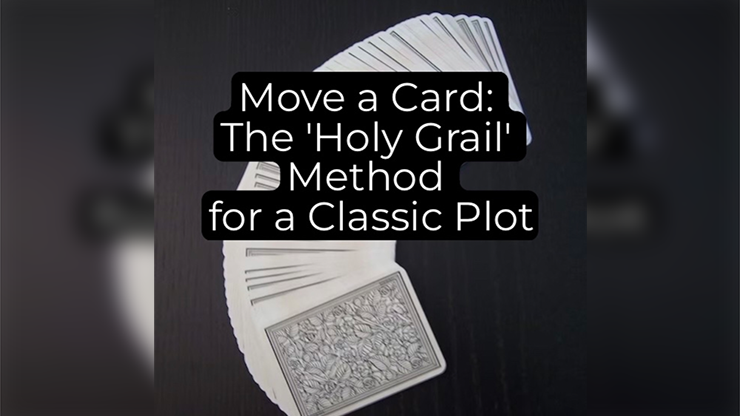
"Move a Card" plot has been around since at least the 1930s, thanks to Moe Seidenstein. Over the years, magicians have whipped up a whole smorgasbord of methods. But honestly, I reckon this one’s the 'Holy Grail' method — it’s got conditions that’ll leave your audience scratching their heads. Amongst other delightful quirks, you can use any borrowed deck, the effect is completely impromptu, and best of all, it’s 100% hands-off (that’s right, you won’t need to touch a single card).
There's a full performance video up top (big thanks to my mate for filming it), but here’s a detailed written rundown too (with all the conditions laid out):
The magician asks the spectator for their own deck of cards, insisting on a borrowed deck for the routine. They’re invited to shuffle the cards however they fancy. Once the spectator has finished making a right mess of the deck (in a good way), the magician promises he won’t touch the cards at any point.
When the spectator's done shuffling, they’re asked to spread the deck face-up on the table so the magician can try to memorise the order of the cards. After a good look, he turns his back to them. He then instructs (still facing away), “Take any card from one side of the spread and move it to the other side, to a completely different spot.” Once that’s done, he adds, “Now square up the spread to hide any evidence of where the card was moved from or to.” The spectator complies, of course.
Once they’re done, the magician turns back around and explains that if he’s truly memorised the order, he should be able to pinpoint which card was moved. After a moment of suspense, he asks the spectator to spread the deck face-up once more. And voilà, after a bit of pondering, he reveals the name of the moved card without so much as a hint of fishing.
Some Important Conditions of Note:
- The effect uses a borrowed, shuffled deck.
- The magician never touches the cards at any point, whether before, during, or after the effect (so yes, you could even pull this off over a video call with the deck on the spectator's side).
- No gimmicks involved — this is as impromptu as it gets. You can perform it anywhere, anytime, no prep needed.
- Minimal memory work required (anyone can manage this) — so no need to memorise a stack of cards or anything daunting.
- The magician doesn’t learn the identity of the selected card until he glances through the spread at the end — so no peeking or forcing nonsense.
- No fishing for info at the end — he can always reveal the selected card without asking questions or awkwardly probing.
Note: The effect detailed above is just one of several routines included. You’ll be schooled in multiple methods for the
"Move a Card" plot. There’s something for everyone here! This is why it’s priced at $20 — you’re not just learning a single method, but several. And let’s be honest, the main method truly is the 'Holy Grail' for this plot, given its crazy-good conditions.

 Sold out
 Sold out


